
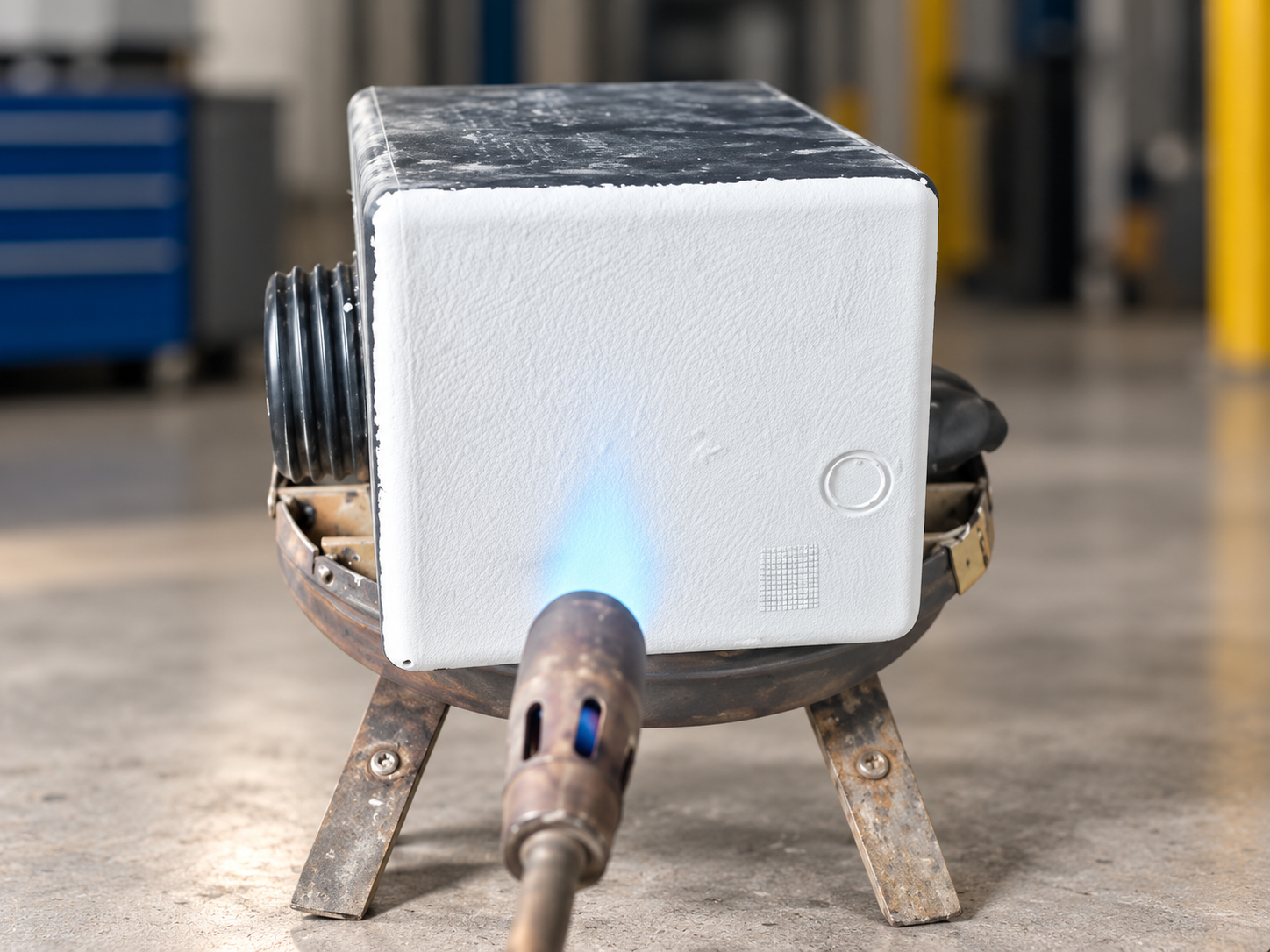
PolyBonda has developed a surface-applied fire-retardant coating technology for rotationally molded containers. Rather than relying on flame-retardant additives incorporated throughout the polyethylene material, this approach applies a protective layer to the container surface.
A surface-applied approach
The technology is designed to enhance protection against flame exposure while aiming to minimize changes to the underlying material’s mechanical properties and intended functionality. Suitability depends on the substrate, coating system, geometry and service conditions.
What the demonstration shows
The video shows a coated container or sample exposed to a direct flame, providing a visual illustration of the coating’s protective approach. It is a flame-exposure demonstration, not by itself a standardized fire classification test, certification or guarantee of unrestricted fire protection.
Application context and limits
The coating is considered separately from the bulk polyethylene formulation and is not presented as an inherent flame-retardant property of any existing SG grade. The design objective is to retain the container’s intended function and underlying material performance; application-specific evaluation is required before making a performance conclusion.
- Substrate grade, surface preparation and coating compatibility
- Coating system, thickness, cure and process controls
- Container geometry, contents, loading and service environment
- Flame or heat source, exposure duration and inspection method
- Applicable customer requirements, standards and certification pathway
Contact PolyBonda to discuss your container design, materials and application requirements.